

Ralph Roelse
Exhibitions
Works
With One Eye Open / Industrial Landscapes
Date
2026, in situ
Material
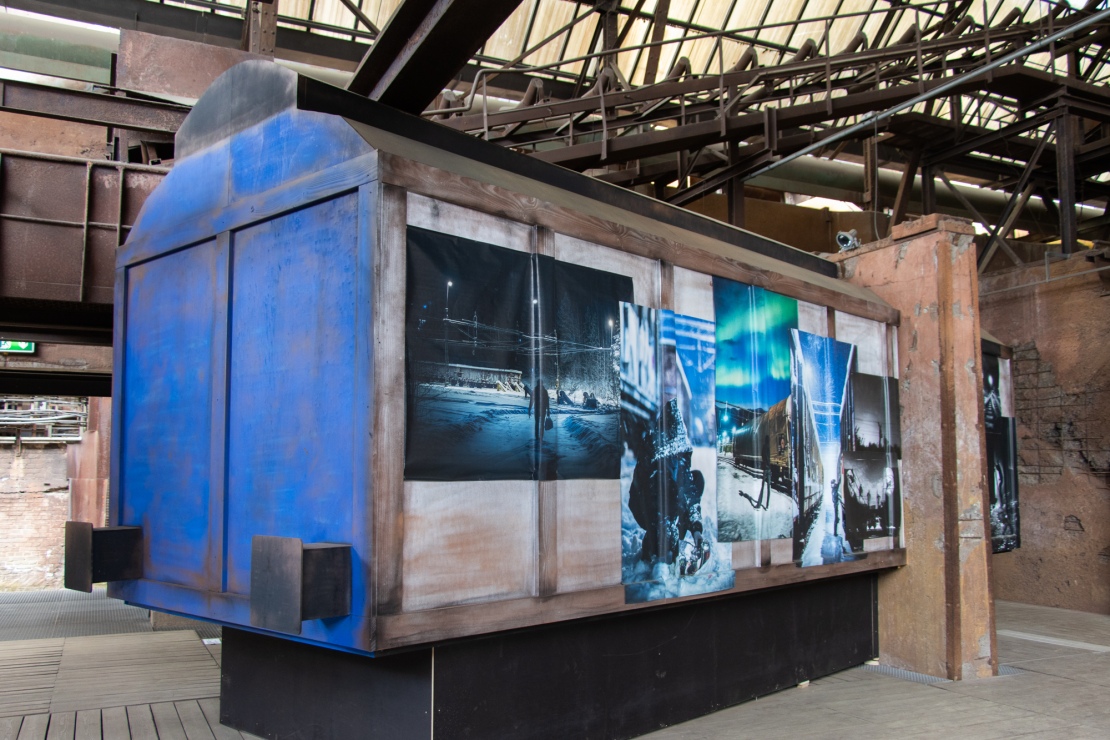
Freight train replica, spray paint on wood, prints, video
Description
A freight wagon that has come to a halt in the Möllerhalle serves as a reminder of the origins of urban art and, at the same time, embodies the guiding principle of the Urban Art Biennale. Alongside the monumental train, a small exhibition on photography within graffiti culture is on display: With One Eye Open / Industrial Landscapes by Jasper van Es explores how railways and (abandoned) industrial areas inspire artists and photographers to capture the raw beauty of these environments. The steel and iron industry continues to shape Völklingen and the region to this day. (Post-)industrial railway areas and interstitial spaces hold a particular allure for graffiti writers – places away from the public eye where walls, industrial sites and freight trains offer ideal surfaces for painting. Here, writers can often work undisturbed, and as these places are gradually disappearing over time, photography becomes the only tangible form of documentation. In the rear section of the train, fragments of industrial landscapes can be seen in a slide show by Ralph Roelse.
My Landscape
Date
2024, in situ
Description
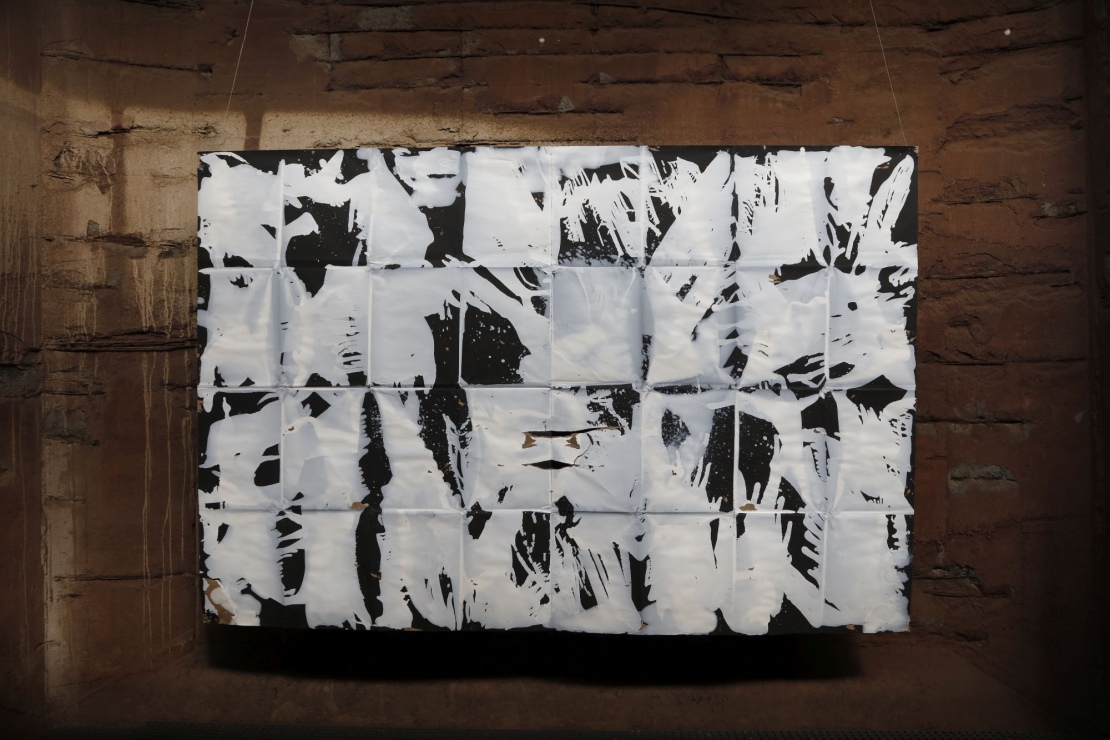
Ralph Roelse is known – or still far too unknown – for his extremely minimalist, wilful and challenging works of abstract painting. He regularly places these without permission in open – if often not exactly public – spaces. “The work benefits from this illegal edge,” he says. Crossing a bridge in a typical industrial area of Eindhoven, for example, you might be unaware that right beneath you is a conceptual mural worthy of a museum. Similarly, some of the freight wagons being shunted through the shipping terminals of the Benelux countries carry his finely composed free forms or his experimental geometries on their steely surfaces. In parallel, Roelse produces no less profound studio art. For him, the two practices are not separate but rather influence one another. Photography also plays a key role in the creative process. Painting outdoors is not an isolated activity but rather part of an entire post-industrial landscape. Conversely, a studio work can be transposed in such a way that – similar to the graffiti works – it transforms space as a piece of urban land art. Likewise, the staging of the gaze and the question of documentary-artistic transport are both always part of the work.
Robert Kaltenhäuser