

Alexander Karle
Webpresence
Instagram: @karlealexander
Exhibitions
Works
mexican standoff
Date
2026, in situ
Material
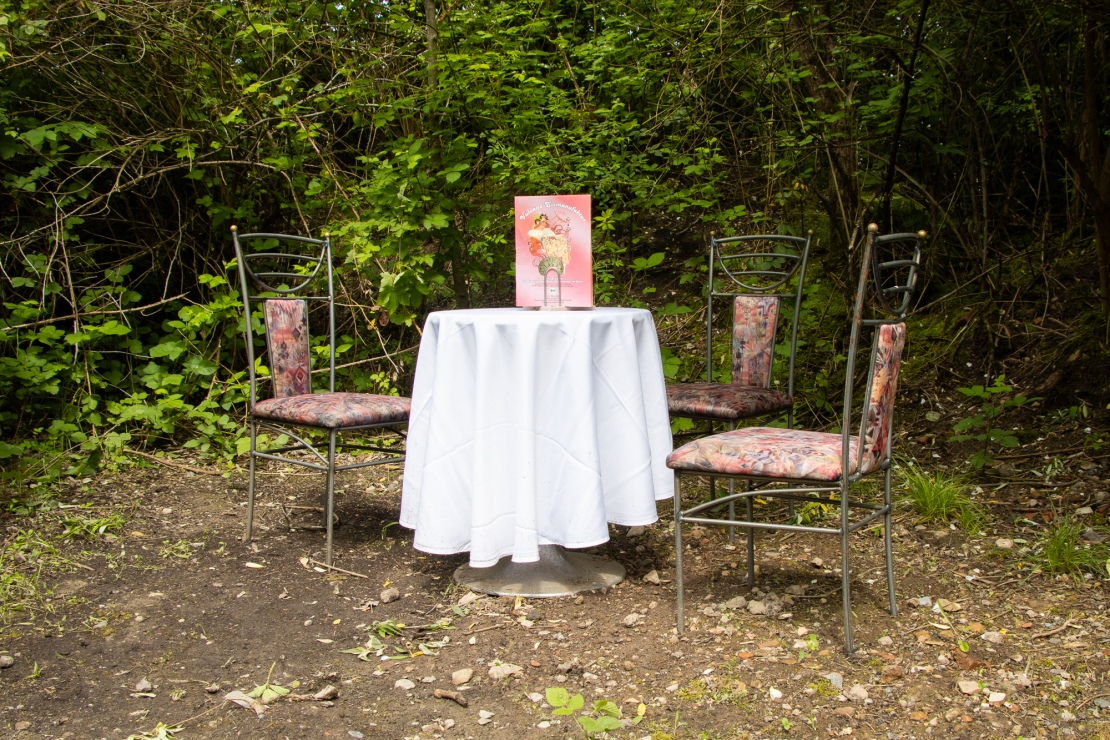
3 chairs, a table, a tablecloth, a display stand and an ice cream menu
Description
With Mexican Standoff, Saarland-based artist Alexander Karle presents an installation that is understated in form but conceptually precise, situated on the fringes of the Urban Art Biennale 2026. The work draws on the principle of the ready-made: A table, three chairs, a tablecloth, a display stand and a menu from the Vulcano ice cream parlour – which opened in Dillingen as far back as 1952 – are relocated to the Völklinger Hütte site and placed in a completely new context. Visitors are invited to take a seat and virtually choose an ice cream from the menu – complete with an endless wait that invites reflection. Two striking symbols enter into dialogue: the ice cream parlour setting as a place of childlike joy, indulgence and a longing for Italy, and the former steelworks site with its brutal industrial and labour history. A ‘Mexican standoff’ refers to a confrontation in which neither side has the chance to emerge victorious. It is a recurring cinematic motif, familiar from films such as Quentin Tarantino’s Inglourious Basterds (2009). In Karle’s work, the title represents the tension between the ice-cream parlour and the historic ironworks – a tension that can only be resolved by the viewers, who mentally bring the two together. The installation derives its impact precisely from its variability: whether deserted or filled with visitors, in spring, midsummer or autumn, in sunshine, wind or rain. It thus becomes a small space within a space, a place for a break, for pausing and for reaching a personal truce between two poles. A truce which, in a figurative sense, the numerous Italian workers at the ironworks may also have made with themselves.